
Accessibility
Text size
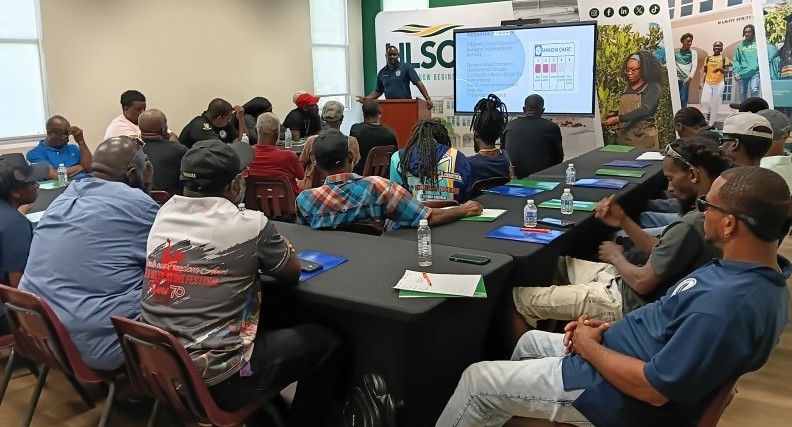
Thirty-four farmers completed a livestock deworming workshop where they learnt how to spot signs of parasitic infection, determine which animals need treatment and administer the correct dose.
The Department of Agriculture and Fisheries held the workshop at the Learning Resource Centre at H. Lavity Stoutt Community College (HLSCC). Training covered common intestinal parasites, with particular attention to the barber pole worm in sheep and goats.
Farmers were introduced to faecal egg counts and the FAMACHA chart as tools to guide treatment decisions. They also learnt how pasture management and responsible use of dewormers can help prevent reinfection and slow the development of drug resistance.
During practical sessions, participants used a weight tape to estimate an animal’s weight, calculated doses and practised administering treatment. They also had the opportunity to ask questions and share experiences from their farms.
Director of Agriculture and Fisheries Theodore E. James welcomed the turnout and urged farmers to keep herd records and treat livestock care as a business priority.
“Worms don’t announce themselves. They show up as weight loss, poor growth, low productivity and sometimes the loss of an animal. Each of those is money leaving your pocket,” James said.
All 34 participants received certificates. The department plans to offer further training for crop and livestock farmers, fish producers and beekeepers.
“We will keep bringing practical, hands-on training to farmers and producers across every sector we serve,” James said.




Community
Comments
What are your thoughts on this story? Share a respectful comment with the community.
Join the conversation
Your comment will appear after review. Email is only needed if you want reply or conversation notifications.