
Accessibility
Text size
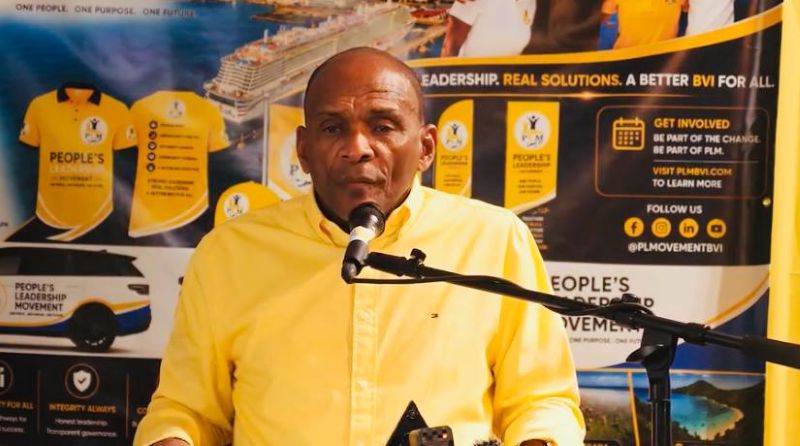
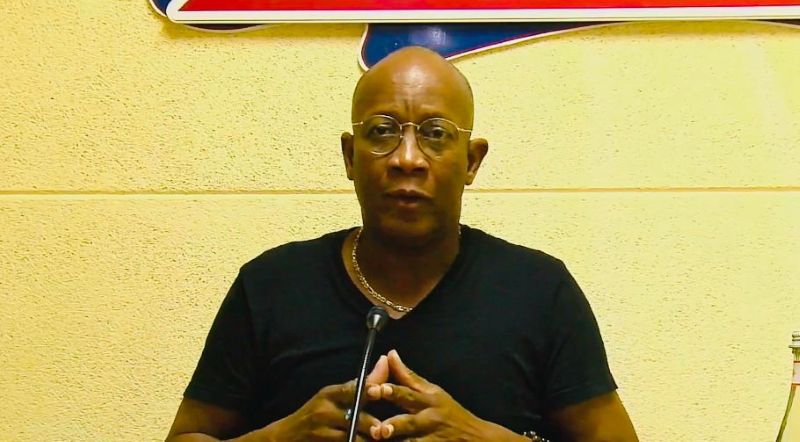
People’s Leadership Movement leader Mark Vanterpool says the Territory’s water crisis is “not rocket science” to fix, blaming the long-standing BiWater arrangement and leaders who lack the courage to overhaul the failing system.
Vanterpool said the decision to depend heavily on one plant at Paraquita Bay to supply communities across Tortola created a flawed system that leaves large sections of the island vulnerable whenever production or distribution problems arise.
“It’s not rocket science,” Vanterpool said during Street Talks with Dakarai Wheatley-Adams on Sunday, August 23. “Water in the BVI is struggling because we decided to put one main plant on the eastern end of the island and send water to the whole of the island.”
The BiWater agreement was signed on February 18, 2010, under the former Virgin Islands Party (VIP) government led by former Premier the late Ralph T. O’Neal. Julian Fraser was the Communications and Works Minister at the time.
The agreement included the construction of a plant at Paraquita Bay capable of producing 2.3 million imperial gallons of water daily, along with sewerage infrastructure.
Vanterpool, who subsequently served as Communications and Works Minister under the former National Democratic Party (NDP) administration from 2011 to 2019, described the contract as an “albatross” around the Government’s neck.
“Even when I was minister, we tried everything to get rid of this contract that we had,” he said.
According to Vanterpool, attempting to pump water from Paraquita Bay across Tortola to communities as far away as Sea Cows Bay is impractical. He said relying heavily on a single production facility also means that one failure can disrupt supplies across several communities.
“Depending on one water plant, when it goes down and something goes wrong, is a huge mistake,” he argued.
Vanterpool said the solution is to return to a decentralised system in which plants serve different sections of the island. He recalled that Sea Cows Bay, Baughers Bay, East End, Capoons Bay and other areas previously had their own production facilities.
“We need to get back to that, and make each plant in each area workable and operational and give water to the people in every area,” he said.
Vanterpool said resolving the problem will require leaders who not only have a clear vision, but are also prepared to make the difficult decisions needed to execute it.
"You've got to be able to have a vision as a leader for the country or leaders, and not just have the vision, but have the courage to carry out the solutions that you are visioning out there for the people. So, it has to have a vision to make water available to everybody," the PLM leader said.
His comments come as residents across the Territory continue to complain about unreliable water supplies, with some communities left without running water for days at a time.
Vanterpool said the decision to depend heavily on one plant at Paraquita Bay to supply communities across Tortola created a flawed system that leaves large sections of the island vulnerable whenever production or distribution problems arise.
“It’s not rocket science,” Vanterpool said during Street Talks with Dakarai Wheatley-Adams on Sunday, August 23. “Water in the BVI is struggling because we decided to put one main plant on the eastern end of the island and send water to the whole of the island.”
The BiWater agreement was signed on February 18, 2010, under the former Virgin Islands Party (VIP) government led by former Premier the late Ralph T. O’Neal. Julian Fraser was the Communications and Works Minister at the time.
The agreement included the construction of a plant at Paraquita Bay capable of producing 2.3 million imperial gallons of water daily, along with sewerage infrastructure.
Vanterpool, who subsequently served as Communications and Works Minister under the former National Democratic Party (NDP) administration from 2011 to 2019, described the contract as an “albatross” around the Government’s neck.
“Even when I was minister, we tried everything to get rid of this contract that we had,” he said.
According to Vanterpool, attempting to pump water from Paraquita Bay across Tortola to communities as far away as Sea Cows Bay is impractical. He said relying heavily on a single production facility also means that one failure can disrupt supplies across several communities.
“Depending on one water plant, when it goes down and something goes wrong, is a huge mistake,” he argued.
Vanterpool said the solution is to return to a decentralised system in which plants serve different sections of the island. He recalled that Sea Cows Bay, Baughers Bay, East End, Capoons Bay and other areas previously had their own production facilities.
“We need to get back to that, and make each plant in each area workable and operational and give water to the people in every area,” he said.
Vanterpool said resolving the problem will require leaders who not only have a clear vision, but are also prepared to make the difficult decisions needed to execute it.
"You've got to be able to have a vision as a leader for the country or leaders, and not just have the vision, but have the courage to carry out the solutions that you are visioning out there for the people. So, it has to have a vision to make water available to everybody," the PLM leader said.
His comments come as residents across the Territory continue to complain about unreliable water supplies, with some communities left without running water for days at a time.
© 2026 BVI Platinum News. This article is original BVI Platinum content. Reproduction or republication without written permission is prohibited.
All them years in power and only now does he have the solution. NEXT!!!
What an embarrassment all the years you in there couldn't have gotten anything fix all of a sudden you're Mark the Builder!!!